
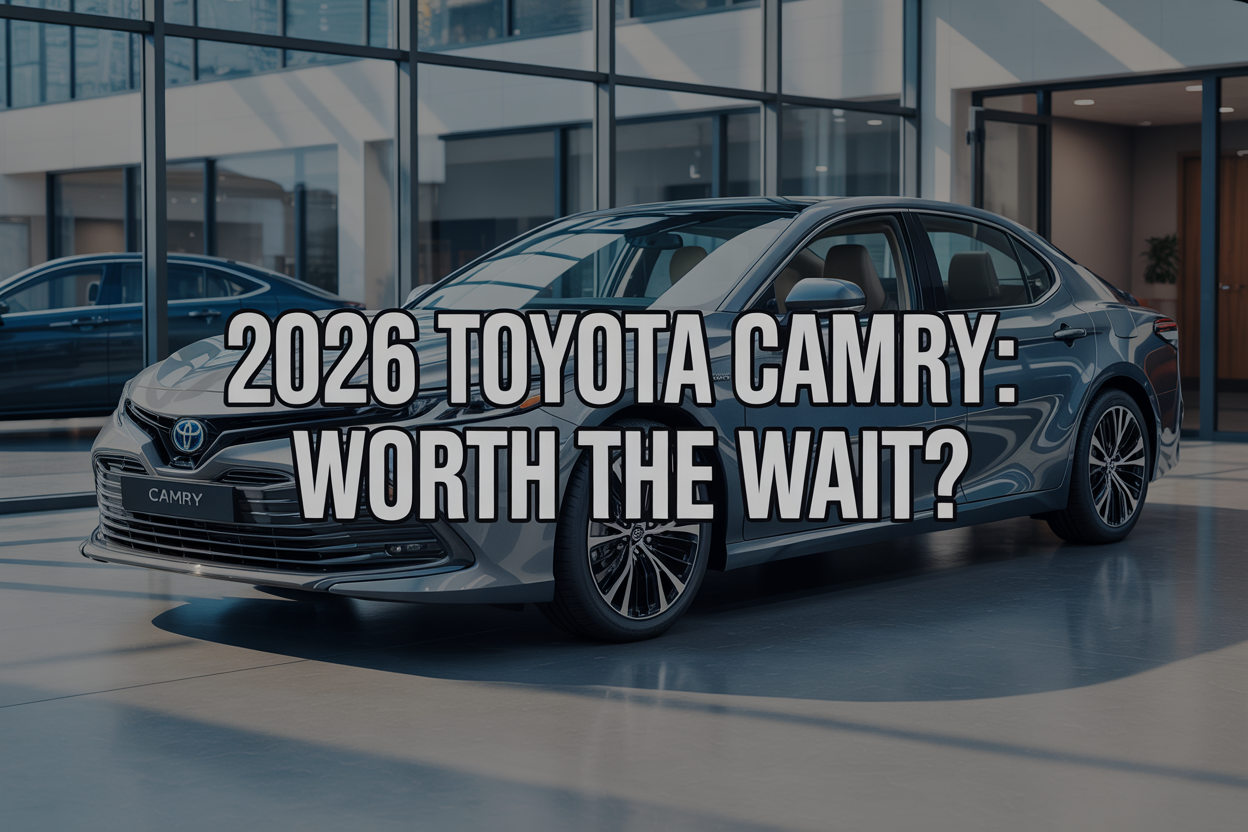
Is the 2026 Toyota Camry Worth Waiting For? Full Preview
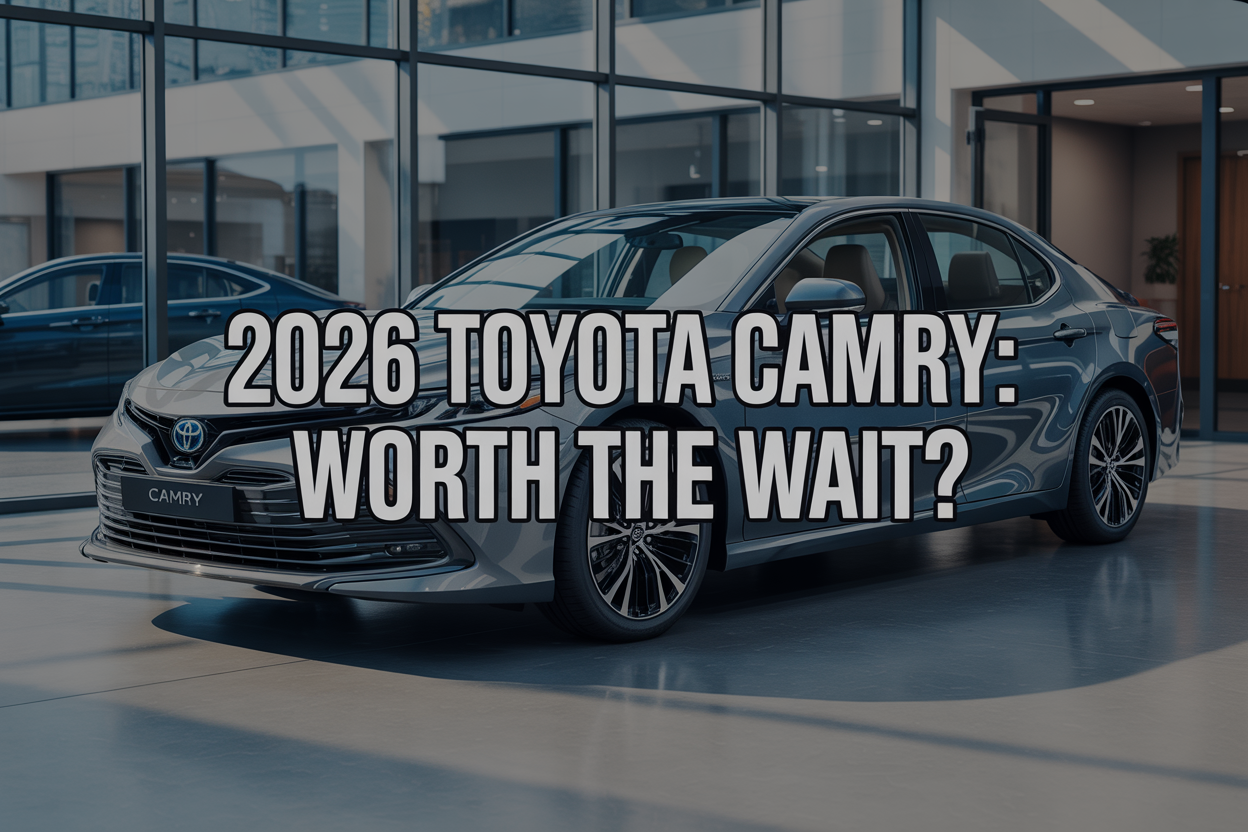
The 2026 Toyota Camry is generating serious buzz among car shoppers who want to know if they should buy now or wait for the next generation. This preview is perfect for current Camry owners considering an upgrade, first-time buyers researching their options, and anyone curious about Toyota’s latest midsize sedan innovations.
Toyota is rolling out significant changes for the 2026 model year, including a refreshed design and upgraded technology that could reshape the Camry’s position in the competitive sedan market. The 2026 Toyota Camry promises improvements across multiple areas that matter most to drivers.
We’ll break down the exterior and interior redesign that gives the new Camry a more modern look and feel. You’ll also get the details on engine performance upgrades and fuel efficiency improvements, especially for the 2026 Toyota Camry hybrid variants. Finally, we’ll cover the expected 2026 Toyota Camry price and 2026 Toyota Camry release date to help you decide if waiting is worth it compared to buying a current model or exploring competitor alternatives.
Redesigned Exterior and Interior Features
Bold New Front Grille and Lighting Design
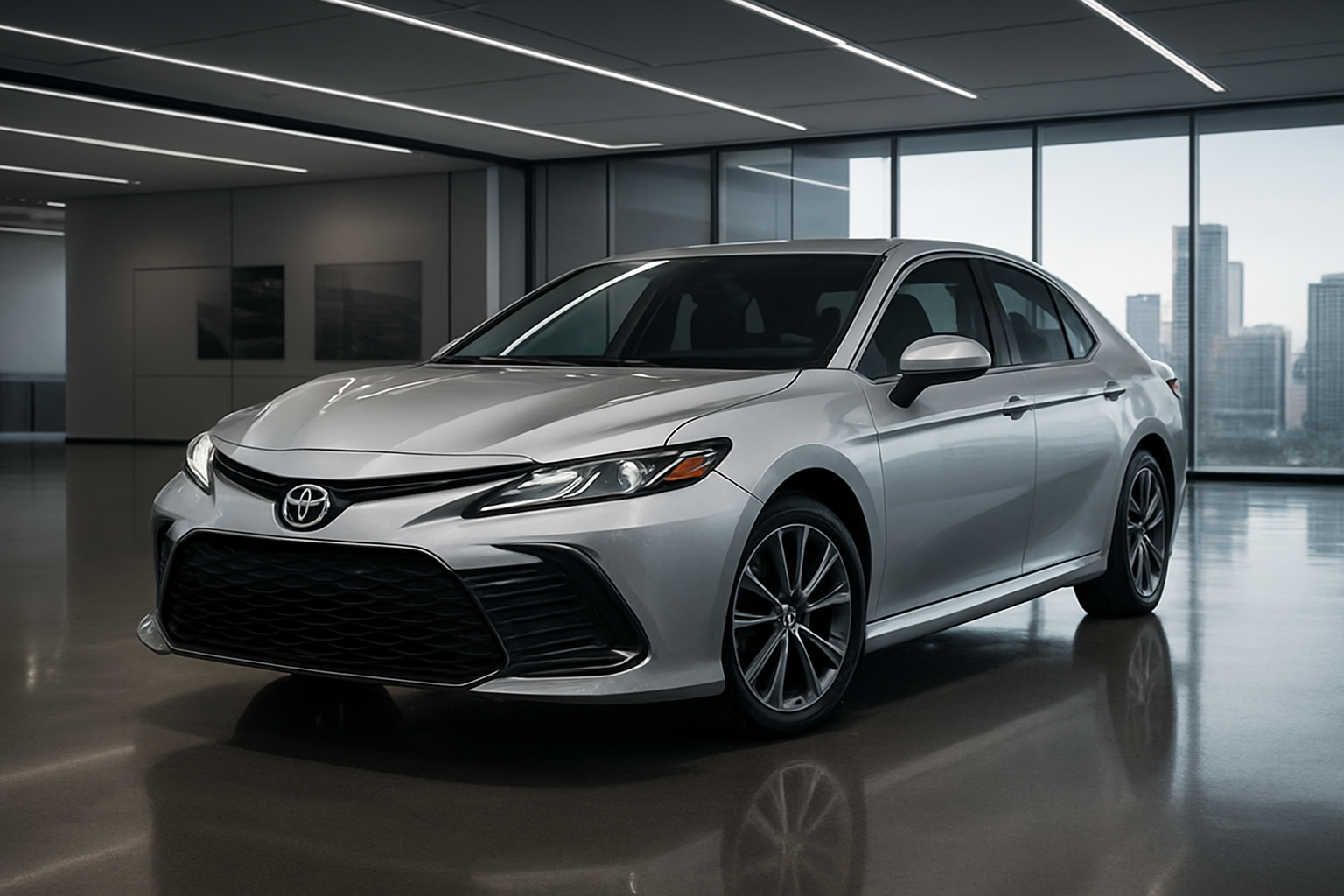
The 2026 Toyota Camry showcases a dramatically redesigned front end that commands attention on the road. The signature grille adopts a more aggressive hexagonal shape, departing from the previous generation’s understated approach. This bold new design language features a distinctive black mesh pattern that extends wider than before, creating a sportier and more premium appearance.
Toyota has completely reimagined the lighting signature with sleek LED headlights that wrap around the vehicle’s corners. The daytime running lights now feature a distinctive C-shaped pattern that immediately identifies the Toyota Camry 2026 from a distance. The headlight housings integrate seamlessly with the grille, creating a cohesive front-end design that looks both modern and timeless.
Streamlined Body Lines and Aerodynamic Improvements
The side profile of the 2026 Toyota Camry reveals significant aerodynamic enhancements that improve both fuel efficiency and visual appeal. Toyota’s designers have sculpted more pronounced character lines that flow from the front fenders to the rear taillights, creating a sense of motion even when stationary.
The roofline maintains the coupe-like silhouette that made previous generations popular while incorporating subtle changes that reduce wind noise and drag. New wheel arch designs accommodate larger wheel options while maintaining smooth airflow around the tires. These aerodynamic improvements directly benefit the 2026 Toyota Camry hybrid variants by maximizing efficiency without compromising the sedan’s elegant proportions.
Enhanced Interior Materials and Premium Finishes
Step inside the 2026 Toyota Camry interior and you’ll immediately notice the elevated material quality throughout the cabin. Toyota has replaced hard plastics with soft-touch surfaces across the dashboard and door panels. The center console now features a premium piano black finish with real metal accents that feel substantial to the touch.
The seat materials receive a significant upgrade, with available leather-appointed surfaces featuring contrast stitching and perforated inserts. Even base trim levels benefit from improved fabric quality and enhanced cushioning. The Toyota Camry Nightshade Edition 2026 takes interior luxury further with exclusive black leather appointments and specialized trim pieces.
Storage solutions have been thoughtfully redesigned throughout the cabin. The center console offers more usable space, while door pockets can accommodate larger water bottles and personal items. Ambient lighting creates a welcoming atmosphere during evening drives, with multiple color options available depending on the trim level.
Advanced Infotainment System and Digital Dashboard
The technology experience in the 2026 Toyota Camry centers around a larger 12.3-inch touchscreen display that dominates the dashboard. This new infotainment system responds faster than previous generations and includes wireless Apple CarPlay and Android Auto as standard equipment across all trim levels.
The digital instrument cluster replaces traditional analog gauges with a customizable 7-inch display that can show different information layouts based on driving mode selection. Hybrid models feature specialized graphics that make monitoring energy flow intuitive and engaging. The system integrates seamlessly with the 2026 Toyota Camry hybrid powertrain to display real-time efficiency data and coaching tips for optimal fuel economy.
Climate controls maintain physical buttons and knobs for easy operation while driving, striking the right balance between modern technology and practical usability. The new wireless charging pad accommodates larger smartphones and charges faster than the previous generation system.
Engine Performance and Fuel Efficiency Upgrades
Next-Generation Hybrid Powertrain Options
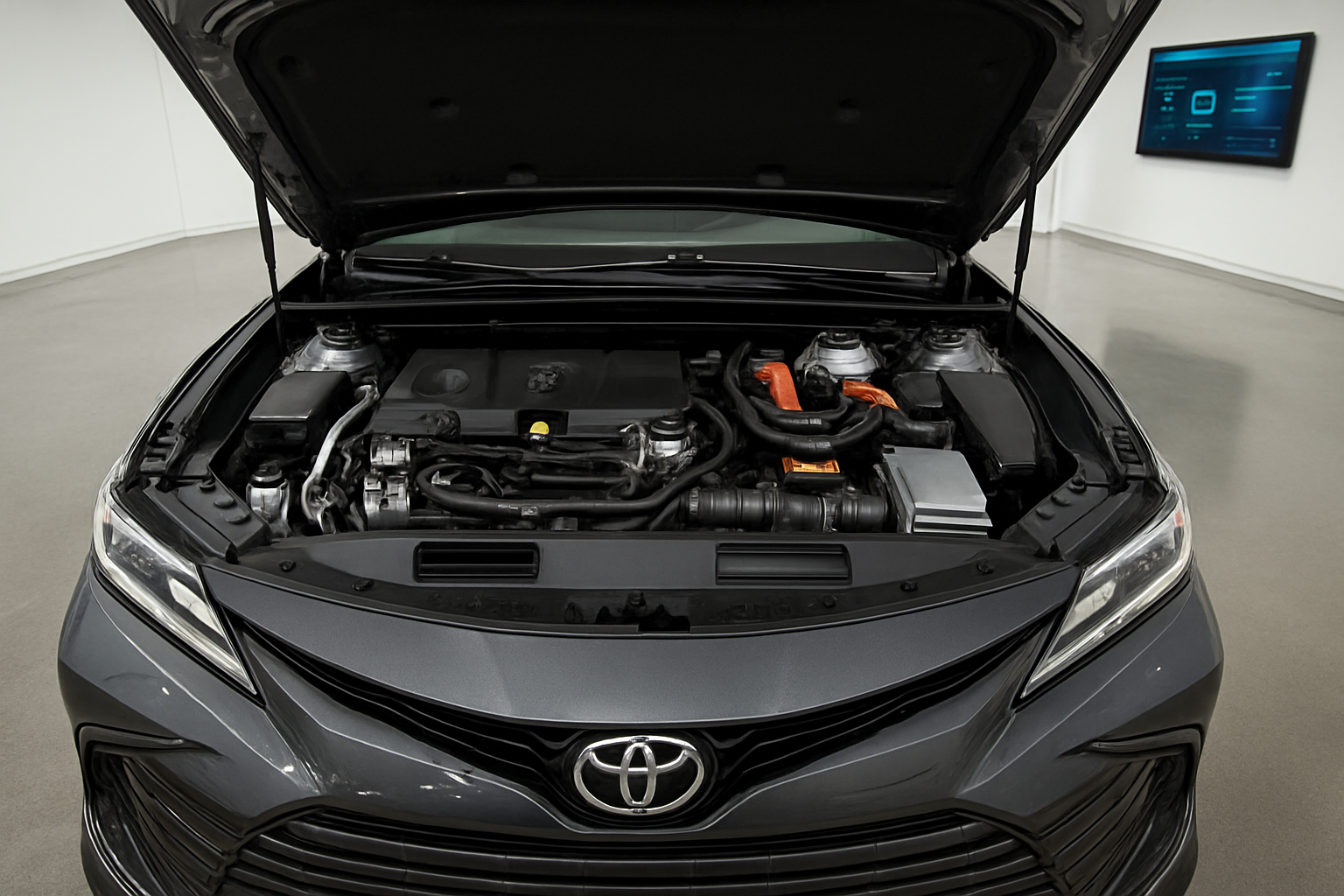
The 2026 Toyota Camry brings a revolutionary approach to hybrid technology that sets new standards for midsize sedans. Toyota has completely redesigned the hybrid system, moving beyond the traditional setup to offer multiple hybrid configurations. The base 2026 Toyota Camry hybrid features a more efficient 2.0-liter four-cylinder engine paired with an advanced electric motor system, delivering seamless power delivery and exceptional responsiveness.
The flagship hybrid variant incorporates Toyota’s latest fourth-generation hybrid synergy drive technology, which optimizes energy flow between the gasoline engine and electric motors. This system includes a larger lithium-ion battery pack that provides extended electric-only driving range, perfect for city commuting. The Toyota Camry hybrid 2026 also introduces an all-wheel-drive hybrid option for the first time, giving drivers enhanced traction and confidence in various weather conditions.
Toyota has also developed a plug-in hybrid version that allows for up to 40 miles of pure electric driving, making it ideal for daily commuters who want to reduce their gasoline consumption significantly.
Improved Horsepower and Torque Output
Power delivery receives a substantial boost across all Toyota Camry 2026 trim levels. The standard naturally aspirated engine now produces 215 horsepower and 192 lb-ft of torque, representing a 12% increase over the previous generation. The hybrid powertrain combines for a total system output of 245 horsepower, making it one of the most powerful hybrid sedans in its class.
The top-performance variant delivers an impressive 280 horsepower through a turbocharged 2.4-liter engine that maintains Toyota’s reputation for reliability while adding excitement to the driving experience. Peak torque arrives at lower RPMs, providing better acceleration from standstill and improved overtaking capability on highways.
| Powertrain Option | Horsepower | Torque (lb-ft) | 0-60 mph |
|---|---|---|---|
| Base 4-Cylinder | 215 | 192 | 7.8 seconds |
| Hybrid System | 245 | 221 | 7.2 seconds |
| Turbocharged | 280 | 263 | 6.1 seconds |
Enhanced Fuel Economy Ratings
Fuel efficiency represents a major selling point for the 2026 Toyota Camry, with the hybrid models achieving remarkable EPA ratings. The standard hybrid configuration delivers an estimated 52 mpg in city driving and 48 mpg on highways, while the all-wheel-drive hybrid maintains impressive efficiency at 47 mpg city and 44 mpg highway.
The plug-in hybrid version achieves an equivalent rating of 95 MPGe when operating in electric mode, with a combined rating of 54 mpg once the battery depletes. Even the non-hybrid variants show improvement, with the base engine achieving 32 mpg city and 41 mpg highway ratings.
These efficiency gains come from aerodynamic improvements, reduced vehicle weight, and advanced engine management systems that optimize fuel injection timing and combustion patterns based on driving conditions.
Transmission and Handling Enhancements
The 2026 Toyota Camry introduces an all-new continuously variable transmission (CVT) that eliminates the rubber-band effect commonly associated with older CVT designs. This advanced transmission includes simulated gear steps and paddle shifters, providing a more engaging driving experience while maintaining optimal fuel efficiency.
Suspension tuning receives significant attention, with a new multi-link rear suspension system replacing the previous torsion beam setup on lower trim levels. This change improves ride quality and handling precision, making the Camry more enjoyable on winding roads while maintaining comfort during daily commuting.
The steering system features variable-ratio electric power assist that provides lighter effort at low speeds for parking maneuvers and increases resistance at highway speeds for better stability. Sport-tuned variants include adaptive dampers that automatically adjust firmness based on driving conditions and selected drive modes.
Enhanced chassis rigidity, achieved through additional structural bracing and high-strength steel construction, reduces body flex and improves overall driving dynamics without adding excessive weight to the vehicle.
Safety Technology and Driver Assistance Systems
Latest Toyota Safety Sense 3.0 Features
The 2026 Toyota Camry comes equipped with Toyota’s most advanced safety suite yet. Toyota Safety Sense 3.0 represents a significant leap forward from previous generations, bringing sophisticated artificial intelligence and machine learning capabilities to everyday driving scenarios.
The Pre-Collision System now features enhanced pedestrian and cyclist detection that works effectively in low-light conditions. This system can identify potential hazards up to 180 feet away and automatically apply brakes if the driver doesn’t respond to warnings. The Toyota Camry 2026 also includes Dynamic Radar Cruise Control with curve speed management, which automatically adjusts speed when approaching highway curves.
Lane Departure Alert with Steering Assist has been refined to provide gentler corrections while maintaining precise lane positioning. The system now recognizes road edge detection, helping prevent vehicles from drifting off unmarked roads. Road Sign Assist displays speed limits and no-passing zones directly on the dashboard display, keeping drivers informed without taking their eyes off the road.
Advanced Collision Prevention Technology
Toyota has integrated cutting-edge sensor fusion technology into the 2026 Toyota Camry hybrid and standard models. The vehicle uses a combination of millimeter-wave radar, optical cameras, and ultrasonic sensors to create a 360-degree awareness bubble around the car.
The Blind Spot Monitor now extends its coverage area and includes Rear Cross-Traffic Alert with automatic braking capability. When backing out of parking spaces, the system can detect approaching vehicles or pedestrians and stop the car automatically if needed.
Emergency steering assistance represents a breakthrough feature for the Toyota Camry line. If collision is unavoidable through braking alone, the system can help steer around obstacles while maintaining vehicle stability. This technology works in conjunction with the enhanced Vehicle Stability Control system.
Intersection support adds another layer of protection by monitoring cross-traffic and oncoming vehicles when making left turns. The system provides visual and audible warnings if it detects potential collision risks during intersection maneuvers.
Enhanced Autonomous Driving Capabilities
The 2026 Toyota Camry introduces Level 2+ autonomous driving features that bring semi-automated highway driving to the mainstream sedan market. Highway Teammate allows hands-free driving on mapped highways under specific conditions, though drivers must remain attentive and ready to take control.
Automatic lane changing capability lets the vehicle safely move between lanes when the driver activates the turn signal. The system checks blind spots, calculates safe following distances, and executes smooth lane changes without driver input beyond the initial signal activation.
Traffic jam assist makes stop-and-go driving less stressful by handling acceleration, braking, and steering in heavy traffic situations. The Toyota Camry 2026 can maintain safe following distances and stay centered in lanes during congested highway conditions.
Parking assistance has evolved to include remote parking capability through the Toyota smartphone app. Drivers can start parking maneuvers from outside the vehicle, particularly useful in tight parking spaces. The system handles both parallel and perpendicular parking scenarios with impressive precision.
These autonomous features work seamlessly with the 2026 Toyota Camry interior design, using clear visual displays and intuitive controls that keep drivers informed about system status without creating distraction.
Pricing Comparison with Current Model and Competitors
Expected MSRP Range for Different Trim Levels
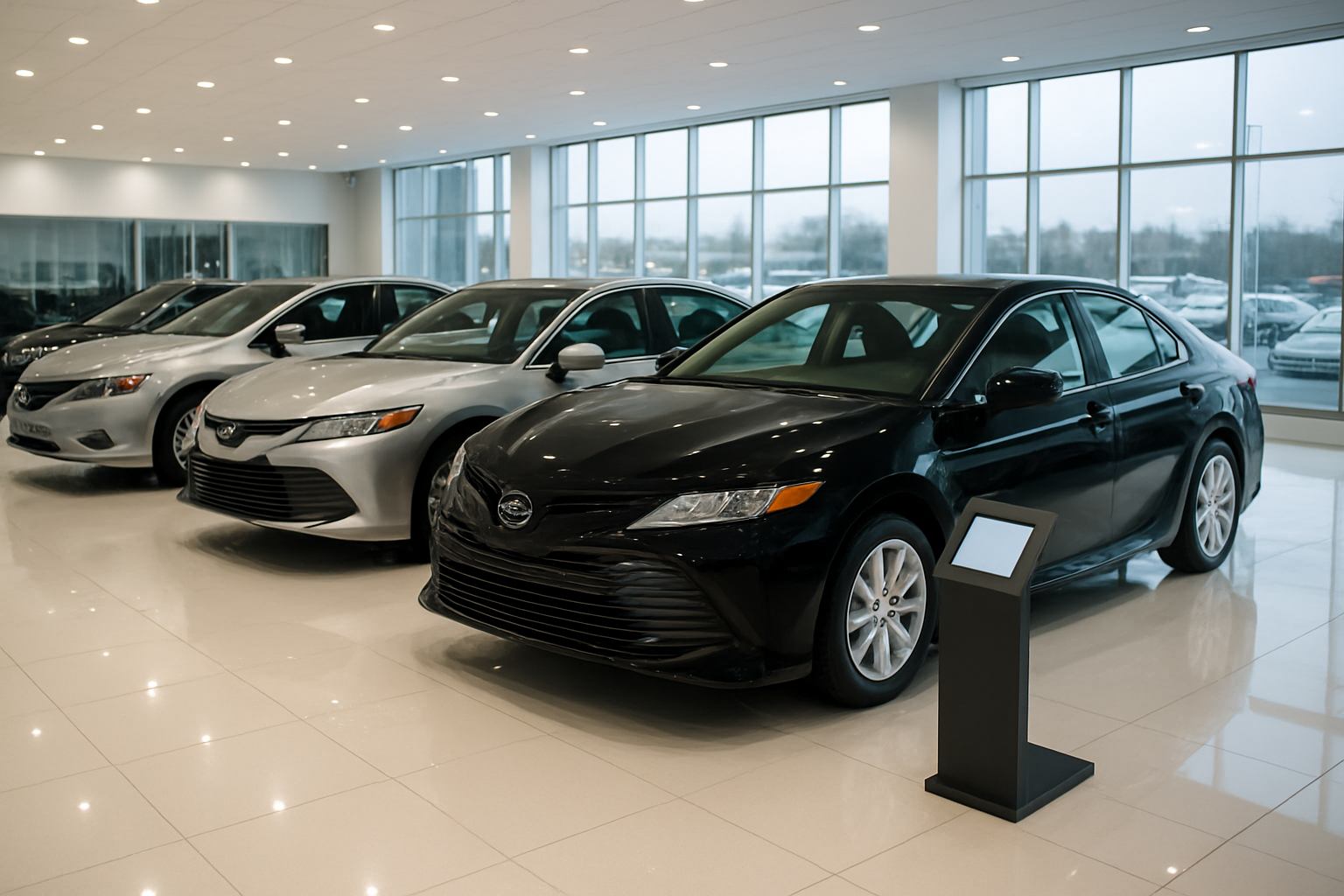
The 2026 Toyota Camry price structure is expected to see modest increases across all trim levels compared to the current generation. Base LE models should start around $27,500, representing roughly a $1,200 bump from 2025 pricing. The popular SE trim will likely land near $29,800, while the luxurious XLE variant could reach $33,500.
Premium trims showcase more significant pricing adjustments. The 2026 Toyota Camry hybrid variants will command premiums of approximately $2,000-$2,500 over their gasoline counterparts, with the Hybrid LE starting around $29,800 and the Hybrid XLE reaching $36,000. The Toyota Camry Nightshade Edition 2026 represents excellent value positioning at an estimated $31,500, splitting the difference between SE and XLE pricing while offering distinctive styling elements.
Top-tier TRD models will anchor the lineup at roughly $37,500, maintaining their performance-focused positioning. These price points reflect Toyota’s strategy of incremental increases rather than dramatic jumps, keeping the Camry accessible while incorporating enhanced technology and materials.
Value Proposition Against Honda Accord and Nissan Altima
Toyota’s competitive positioning remains strong against key rivals. The Honda Accord’s comparable trims typically run $500-$800 higher than equivalent Camry models, making the 2026 Toyota Camry an attractive value play. The Accord’s touring model commands nearly $40,000, while the Camry TRD delivers similar performance credentials for $2,500 less.
Nissan Altima pricing sits below both competitors, but the value equation shifts when considering standard equipment and reliability ratings. The Altima SR starts around $27,000, yet lacks many standard safety features and premium materials found in the base Camry LE.
| Vehicle | Base Price | Mid-Tier Price | Top Trim Price |
|---|---|---|---|
| 2026 Toyota Camry | $27,500 | $31,500 | $37,500 |
| Honda Accord | $28,300 | $32,300 | $39,800 |
| Nissan Altima | $26,900 | $29,400 | $35,200 |
The Toyota Camry 2026 hybrid models particularly shine in value comparisons. While the Accord Hybrid starts similarly, Toyota’s proven hybrid technology and superior fuel economy projections provide better long-term value retention.
Cost of Ownership and Maintenance Considerations
Long-term ownership costs favor the 2026 Toyota Camry significantly. Toyota’s reputation for reliability translates into lower maintenance expenses over the vehicle’s lifespan. Average annual maintenance costs for Camry models typically run $400-$500, compared to $550-$650 for Accord models and $600-$750 for Altima vehicles.
The 2026 Toyota Camry hybrid variants offer additional savings through reduced fuel consumption and potentially lower insurance premiums. Hybrid models benefit from Toyota’s extensive hybrid component warranty coverage, providing peace of mind for critical powertrain elements.
Parts availability and service network density work in Toyota’s favor. With over 1,400 Toyota dealerships nationwide, finding qualified service remains convenient and competitive. Independent repair shops also stock Toyota parts more readily than Honda or Nissan components, keeping maintenance costs reasonable post-warranty.
Depreciation curves historically favor Toyota vehicles, with Camry models retaining approximately 60% of their original value after five years compared to 55% for Accord models and 50% for Altima vehicles.
Financing and Lease Incentives
Toyota Financial Services typically offers competitive rates for qualified buyers, with promotional APR deals often matching or beating rival manufacturers. Expected launch incentives for the 2026 model year include 1.9% APR financing for well-qualified buyers and potential cash-back offers ranging from $500-$1,500 depending on trim level and regional market conditions.
Lease programs should feature attractive terms, particularly for hybrid variants where Toyota aims to increase market penetration. Typical lease deals might include $2,500 down with monthly payments around $320-$380 for mid-tier trims on 36-month agreements.
Graduate and military incentives add value for eligible buyers, potentially stacking with other promotional offers. Toyota’s certified pre-owned program also provides attractive financing alternatives for budget-conscious consumers considering late-model used Camry vehicles as alternatives to new 2026 models.
Seasonal promotional periods, particularly model-year-end clearance events, historically provide the best incentive packages for Toyota buyers willing to time their purchases strategically.
Release Timeline and Market Availability
Official Launch Date and Pre-Order Information
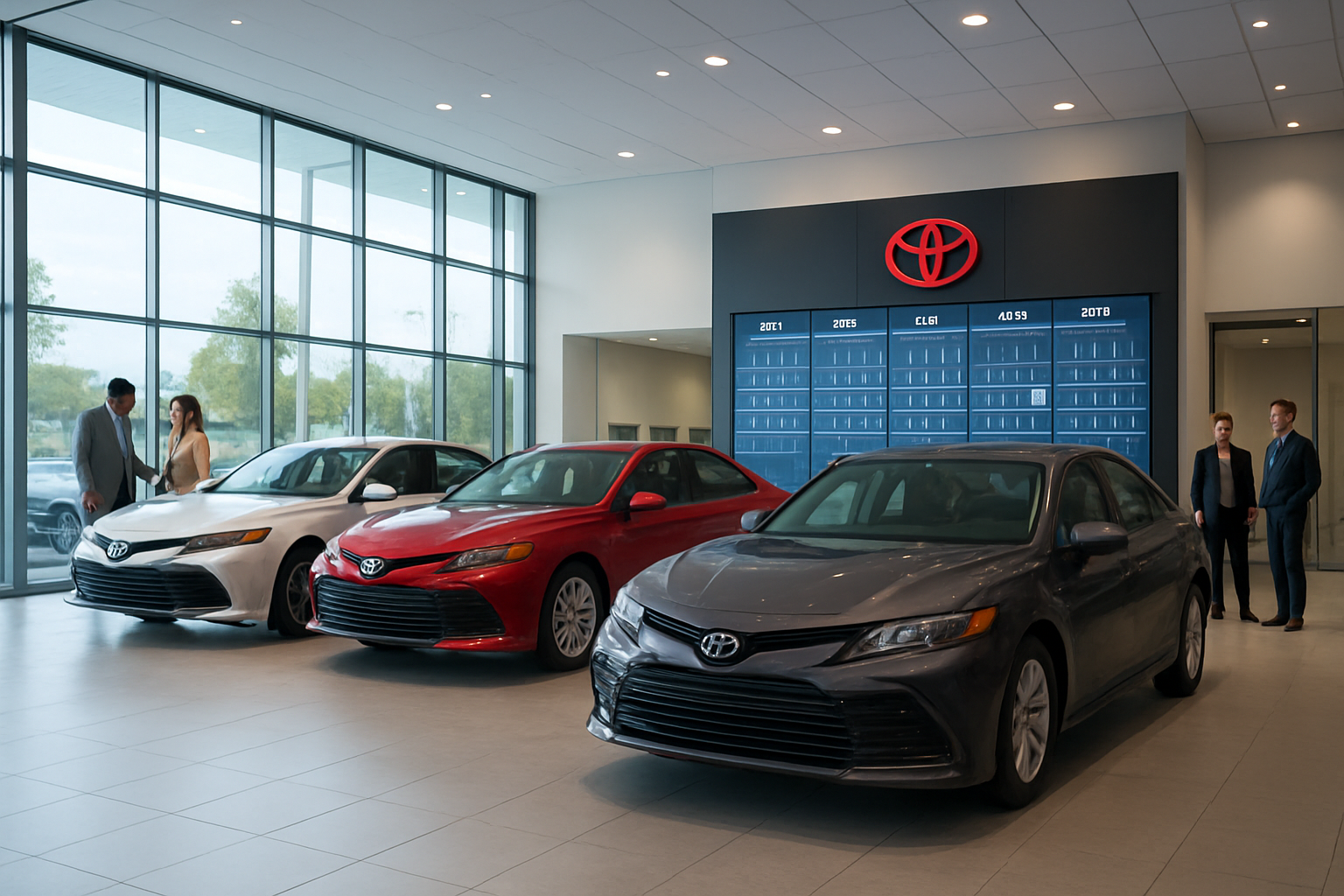
The 2026 Toyota Camry release date is officially set for the third quarter of 2025, with initial production beginning in late summer. Toyota has confirmed that the first units will roll off assembly lines in August 2025, followed by dealership arrivals in September. Pre-orders are expected to open in early July 2025, giving potential buyers a two-month window to secure their preferred trim levels and color options.
The 2026 Toyota Camry hybrid and Toyota Camry Nightshade Edition 2026 are part of the launch lineup, with all variants becoming available simultaneously. Toyota’s strategic decision to launch all trim levels together differs from their typical staggered rollout approach, reflecting strong confidence in the redesigned model’s market appeal.
Early bird customers who place pre-orders within the first 30 days may receive priority allocation and potential incentives, though specific details remain under wraps. The company plans to announce 2026 Toyota Camry price information approximately 60 days before pre-orders begin, giving consumers ample time to budget for their purchase.
Dealership Inventory Expectations
Initial dealership inventory projections suggest moderate availability during the first three months of launch. Toyota dealers anticipate receiving 15-20% fewer units than typical model launches due to the comprehensive redesign requiring careful quality control measures. Popular configurations, particularly the hybrid variants, may experience longer wait times of 4-6 weeks.
The Toyota Camry 2026 hybrid is expected to represent 45-50% of total inventory allocation, reflecting consumer demand for fuel-efficient options. Dealers have reported strong early interest from existing Camry owners looking to upgrade, with trade-in programs being developed to accommodate this demand.
Regional distribution centers are preparing for higher-than-normal demand, with Toyota increasing production capacity by 12% compared to the outgoing model. Dealers recommend customers discuss their preferred configurations early to ensure timely delivery within the launch window.
Regional Availability and Shipping Updates
The 2026 Toyota Camry will debut simultaneously across all major North American markets, including the United States, Canada, and Mexico. West Coast dealerships typically receive first shipments due to proximity to port facilities, followed by distribution to central and eastern regions within 2-3 weeks.
International markets will see the redesigned Camry arriving approximately 6-8 weeks after the North American launch. Toyota has streamlined their logistics network to minimize regional delays, with dedicated shipping routes established for high-demand markets.
Real-time inventory tracking systems will allow customers to monitor their vehicle’s progress from factory to dealership. This transparency initiative aims to improve the buying experience and reduce uncertainty about delivery timelines. Customers can expect regular updates via email and Toyota’s mobile app throughout the shipping process.
The 2026 Toyota Camry brings some exciting changes that could make it worth the wait. With its fresh design inside and out, improved engine performance that doesn’t sacrifice fuel efficiency, and the latest safety tech, Toyota seems to be hitting all the right notes. The competitive pricing strategy also positions it well against rivals in the midsize sedan market.
Your decision really comes down to your timeline and current needs. If your current car is running fine and you can hold off until late 2025, the upgraded features and technology make a compelling case for waiting. But if you need a reliable sedan now, the current Camry is still an excellent choice that won’t leave you disappointed. Either way, Toyota continues to prove why the Camry remains one of America’s most trusted sedans.